
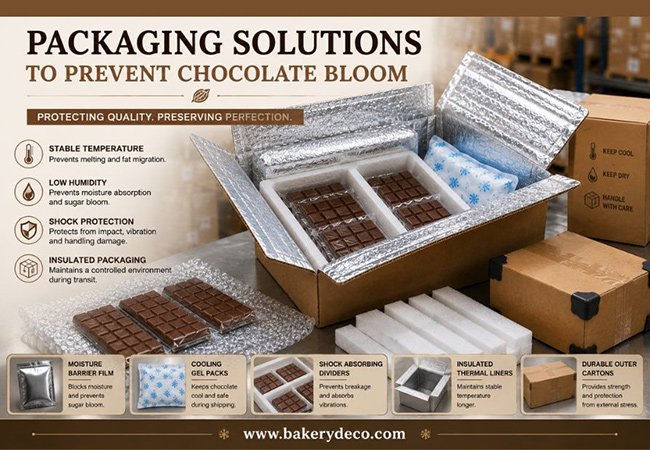
Bloom: A Major Challenge Impacting Chocolate Industry
This is really frustrating for a chocolate lover to open a favorite bar assuming a shiny chocolate exterior but discover a faded, powdery white or grayish layer over it. For chocolate manufacturers, retailers, and distributors such a white layer signals a serious issue. This is termed as “chocolate bloom”.
Although bloom doesn’t imply that the chocolate is spoiled or harmful to consume, this seriously damages the aesthetic attraction and the enjoyment of eating. Since chocolate spends hours during delivery or in storage, bloom often appears in this time period.
This guide describes what triggers bloom, methods to avoid it, and the ideal packaging and ways to maintain the product perfectly.
What’s Meant by Chocolate Bloom & Why Does it Matter?
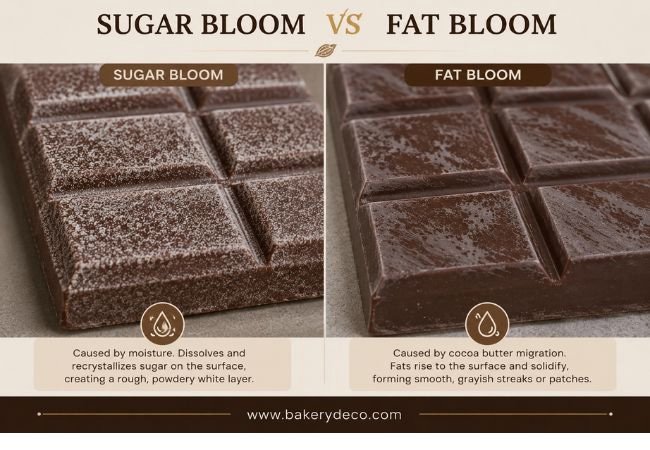
Chocolate bloom means a natural exterior flaw which appears when the physical elements of chocolate split and move to the surface of chocolate. It mainly exists in 2 different forms: Sugar Bloom & Fat Bloom.
Sugar Bloom
This develops when humidity contacts the exterior of the chocolate. The water melts sugar crystals present on the outer surface. When the humidity dries, it results in white, rough, powdery sugar layer. Sugar bloom is coarse and scratchy.
Fat Bloom
It develops when the cocoa butter inside the chocolate dissolves, splits and moves to the surface. After cooling down the cocoa butter solidifies again and forms irregular, grayish marks or patches. Fat bloom seems oily and damages the smooth texture of the chocolate.
Bloom harms revenue and company reputation. Customers consider the product as expired, old or stale, causing negative comments and more returns. Storage and transportation represent the highest problems because chocolate is a delicate item. After leaving the factory, climate and moisture variations trigger issues.
Primary Factors of Chocolate Bloom
Knowing the basic process of how bloom appears makes it easier to avoid. Various structural and climate conditions cause such unwanted change.
Temperature Variations During Stocking
Chocolate is highly temperature-sensitive. Cocoa butter remains unchanged only in a limited temperature range. Just a slight increase in heat during storage dissolves the fats.
When they dissolve, fats travel along microscopic pores to the exterior. When the chocolate cools, fats solidify to form uneven crystals. Changes of only 2 to 3 degrees Celsius during storage may create bloom.
Humidity Exposure
Heat leads to fat bloom while humidity creates sugar bloom. Excess moisture allows water to collect onto chocolate. Sugar absorbs this water and melts on the outer layer.
The main reason is quick shifting of chocolate from chilled to room-temperature. Refrigerated chocolate in room-temperature experiences condensation. The moisture melts sugar and produces sugar bloom.
Poor Handling
Careless treatment during delivery and stocking damages chocolate. Dropping boxes, excessive loading and transport vibrations create small cracks. These microscopic cracks offer liquefied fat an immediate way to the exterior during heat variations, causing fat bloom.
Cacao Butter Versus Cacao Butter Substitutes
The specific formulation of chocolate plays a major part in how quickly it blooms.
· Regular Cacao Butter
Genuine chocolate with 100% cacao butter may create six crystal types. Only 1 gives the shine and crisp crack. This makes the chocolate very sensitive to hot temperature and humidity.
· (CBS)Cacao Butter Substitutes & (CBR)Cacao Butter Replacers
Compound chocolates are produced using coconut or palm oil and can tolerate more heat. CBR/CBS don’t require tempering and prevent fat bloom effectively. However, they may still experience sugar bloom due to humidity.
Storage Environments Which Avoid Bloom
Managing a controlled condition inside distribution centers, inventory rooms and retail storage areas is the initial method of protection against chocolate degradation.
Recommended Temperature Levels for Specific Chocolate Types
Maintaining storage conditions constantly is essential. Sudden changes in temperature are much risky than a stable, slightly warmer temperature.
· Dark Chocolate
Ideally kept constantly within 15 and 18 degrees Celsius.
· Milk Chocolate
Perfectly kept constantly between 14 and 17 degrees Celsius.
· White Chocolate
Highly sensitive because of the rich milk-fat ratio, store within 13 and 15 degrees Celsius. Genuine cocoa butter chocolate needs to remain chilled and steady. CBS/CBR types tolerate more heat, however, constant storage additionally maintains appearance and texture.
Moisture Adjustment in Warehouses and Storage Rooms
Maintain “Relative Humidity” (RH) in chocolate warehouses under 55%, preferably 40-50 percent. Install commercial HVAC and dehumidifiers to manage humidity. Keep chocolate away from evaporative cooling systems and entry doors where moist air flows in.
Issues of Odor, Light & Shelf Life
Apart from humidity and heat, air and light also impact chocolate. Strong fluorescent lights and sunlight heat the chocolate surface which liquefies fat and triggers bloom. Ultraviolet leads to oxidation, giving stale chocolate taste.
Cacao butter absorbs surrounding odors quickly. Store it away from chemicals, scented wood, foods and soaps. CBR/CBS handles light better however, every chocolate product requires odor-free, dark and controlled warehousing.
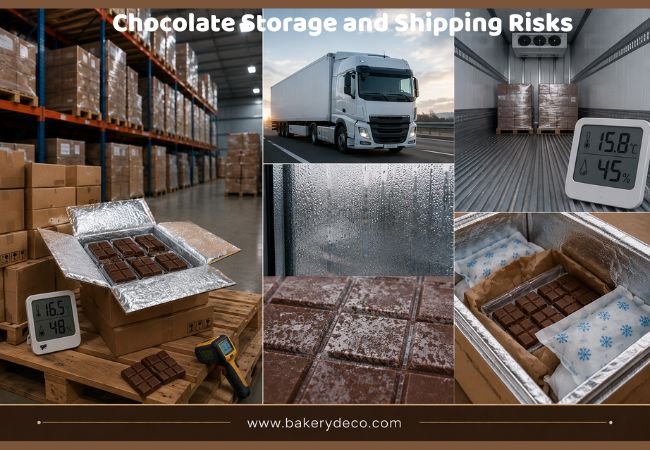
Shipping & Transit Threats
The supply process brings the biggest risk for chocolate quality because items travel via uncontrolled areas, loading platforms and different delivery vehicles.
Temperature Management During Delivery
To preserve quality, cacao butter chocolate requires chilled transit including temperature-regulated vessels or reefer trucks. A frequent problem is placing chocolate stock on heated docks while loading/unloading. Only half an hour on a hot platform can trigger fat liquefying.
Compound chocolates (CBS/CBR) don’t generally require refrigeration during moderate climate, making them less expensive to deliver however, intense temperature must be avoided anyways.
Moisture Issues in Trailers & Containers
Transit across extended routes or via sea paths causes severe moisture changes.
· Sea Shipping
Typical delivery vessels moving through changing temperature regions cause container sweating, in which atmospheric humidity collects on the vessel ceiling and falls on chocolate stock.
· Moisture Traps
Keeping heavy-duty humidity-trapping absorbent bags inside shipping vessels stops vapor accumulation.
· Temperature-Control Liners
Adding insulated shipping-container sheets repels heat and prevents moisture from reaching products.
· Pre-Chilling
Every time pre-chill cargo vessels to align with the chocolate’s temperature before loading.
Transport Duration, Shaking and Physical Impact
Prolonged shipping raises a threat. Route shaking due to transport harms chocolate’s fat formation. Choose gentler transit and shock-absorbing trucks to minimize cracks and avoid fat bloom.
Immediate-Transfer & Doorstep Delivery Risks
Heat management fails especially during the last stage. During Immediate-transfer unregulated movement exposes products to high temperature. Final-stage trucks usually have no cold-storage therefore early morning deliveries support extreme heat prevention and daylight degradation.
Packaging Methods to Prevent Bloom
First, second and third-layer wrappings serve as physical barriers, protecting chocolate from heat changes, atmospheric contact and degradation.
Protective Sheets & Humidity Defense
To avoid sugar bloom, chocolate requires protection against humanity. Pack it using moisture-proof films including coated polypropylene and aluminum foil to block moisture and stop humidity from reaching the chocolate.
Heat Resistant Packaging for Shipping
During shipping straight to customers or sending mini packages through courier, heat-resistant packaging solutions are necessary.
- EPS “Expanded Polystyrene” insulated container, gel cooling-agent bags and recycled fiber temperature-controlled liners protect package shipments.
- The amount of chilled gel bags and thickness of insulation should be accurately estimated according to overall transport time-period, yearly weather cycle and temperature conditions of destination.
- Ingredients affect packaging decisions: items formulated using temperature-resistant cacao butter alternatives usually require minimal thermal-barrier, lowering delivery expenses compared to 100% cacao butter products.
Shock-Absorption & Vibration-Prevention Systems
Effective external packaging avoids physical damage. Durable layered cartons, dividers, foam sheeting and bubble wrap reduce movements. Tight-fitting packaging takes in jolts and transport shaking to prevent breaks and fat bloom.
Optimal Methods Concerning Storage & Distribution
Applying standardized storage policies protects chocolate throughout under your supervision.
Stock Rotation, Sequential-Dispatch and Storage Inspection
Apply the FIFO method. First dispatch older stock to prevent bloom. Inspect displays routinely for thermal fluctuations and packaging damage.
Environment-Stabilized Storage Compartments
Divide storages into environmental sections using heat-resistant dividers or chilled units. Avoid keeping chocolate in dry spaces close to warm roof lines. Install always-on detectors to monitor moisture and heat, and notify the team if readings exceed the safe limits.
Educating Team About Loading & Handling
Educate storage staff that chocolate is sensitive. Keeping stock on docks, overloading trucks or turning off cooling systems destroys products. Quick dispatching is mandatory.
Methods to Detect Bloom
Even using strict precautions, failures occur. Understanding methods to recognize and act against bloom saves revenue and client trust.
Identifying Sugar Bloom Versus Fat Bloom
The type of bloom can be immediately recognized through an easy physical method.
· The Touch Method
Carefully touch the white layer with finger. If the layer dissolves instantly and seems silky, oily, it’s fat bloom since cacao butter dissolves with body heat.
If the white layer feels coarse, dry, and doesn’t dissolve, it’s sugar bloom.
· Water Drop Method
Put a tiny water drop on the chocolate. If the white layer gets dissolved with water, it’s sugar bloom.
Bloomed Chocolate: Is it Recoverable?
Bloomed chocolate is edible however it seems faded. Liquefy and re-temper fat bloomed chocolate to recover it. It’s perfect for baking.
Sugar bloomed chocolate can’t be restored however, it’s acceptable for baking or glazes. If the product can’t be reprocessed for consumer sales, utilize it in baking or sell with discounts.
Client Outreach & Trust
If buyers report about bloom, educate them that it’s not spoilage or mold, but sugar or fat separation.
Exchanging bloomed products immediately earns trust and proves quality.
FAQ
Does every chocolate require to be delivered using refrigerated container?
Not every time. Cacao butter chocolates require cooling to prevent liquefying and bloom. CBS/CBR chocolates are heat-resistant, they may not need. However, heat and moisture should be still under control.
Is it possible to restore bloomed chocolate or is it wasted?
It’s possible to restore fat bloom via re-processing. Its taste remains unaffected. Sugar bloom can’t be fixed because of texture change. Bloomed chocolates can be discounted or utilized for baking.
Can CBS/CBR chocolates get delivered without cooling?
These chocolates are able to be delivered without cooling during moderate climate because their fats feature increased melting points. However, secure them from excessive temperatures, moisture and sunlight to maintain quality.
How can moisture trigger chocolate bloom?
Humidity melts outer sugar particles. Once moisture disappears, sugar re-solidifies as a white, rough, powdery layer.